Important Considerations When Creating
Scenery For Your Model Railroad Layout
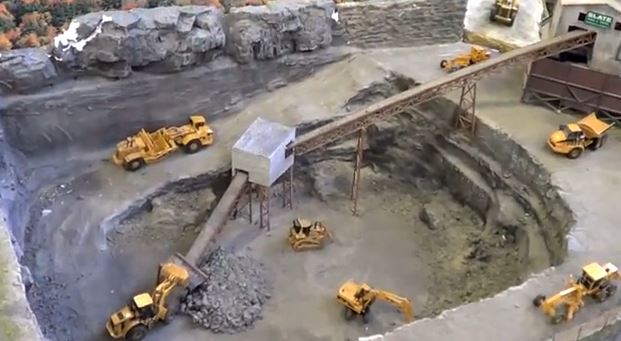
Trains don’t just run through an empty landscape, so the scenery (geographical
setting) is a vital part of any train layout. Constructing the countryside and cityscape through
which your train will travel can be tremendous fun. You need to consider the era, geographic
location, and relative prosperity of the area being modeled.
Scenery can add so much life to your layout - if it's done properly. Depending on the effect you
want, the scenery can be simple to create, or it can take a lot of work. You need to start with the
knowledge of how to get the results that you want.
Generalist Layout or Specialist Layout?
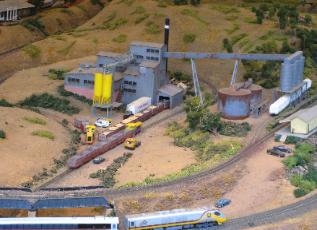
A specialist model railroad layout is where there's one major source
of traffic, for example a steel mill, brewery or saw mill. In this case, you most
definitely need to study the subject in order to model it correctly. If you love
the subject, this is the sort of layout you should consider
building.
A generalist model train layout is where almost anything goes. A sea port for
example could realistically be expected to send and receive almost all kinds of
freight cars. A generalist layout allows for flexibility which for many railroaders
is a good reason to choose this kind of layout.
Three Important Considerations:
1. Since scenery is all about "place" it's best if you think
about "era" - or what time period you are wanting the scene to look like.
Once you decide, that affects everything - from the obvious, like the era of the
rolling stock, to the not so obvious, like the color of paint on a building in that time
frame...
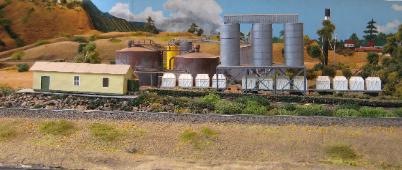
2. The second thing about "place" is where in the world is
it? Is it in the Rockies? The prairies? What state or province or country? If you
try to "locate" your layout in a specific geographical region, you can much more
easily match what you are doing to photos or life experience.
It's more realistic to work on a real place than it is to create a new place in
the world.
Remember, sometimes it's harder to copy a well known "real" place in the world
because that comes with expectations (either your own expectations or everyone else's).
3. Select a season. If you do, it's much EASIER to be able to
select the materials you need because you have a filter to pass things through - for instance, you
know you don't need to make SNOW!
Anyway, these are just 3 of the 9 tips that are covered in Model Train Help Ebook. If you haven't picked up the
ebook, just click the above link to read more about it.
When Not To Make Your Scenery Perfect.
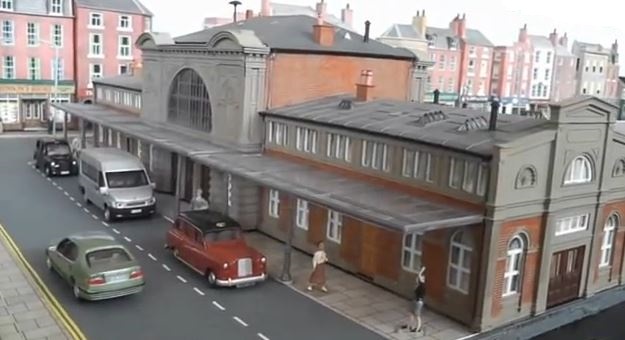
We've all walked down city streets and observed the less than perfect side to real city life.
So, why make a cityscape on your model railroad layout look like a scene from Fantasy Island.
When modeling an urban scene, never forget the garbage that could be present. What about adding
an old newspaper, some garbage cans, cracks in the pavement, graffiti, an old rundown shack,
perhaps piles of junk, a broken-down old car and scrape outside of major industry or railyard.
Although you don't want to overdo it, a bit of imperfection will add to the reality of most city
scenes. Look around you and come up with your own ideas.
Create a Board Effect When Scratch Building
Here is an inexpensive technique to use when scratch building structures out of balsa wood. Take
a flat piece of thin balsa and then use a metal dog comb with a straight edge to create a board
effect on the wood. This effect can look as good as any manufactured siding. The key is to use a
comb that is the scale width.