Why Garden Railroading
Is Increasing In Popularity
Creating A Garden Railroad In A Natural Environment

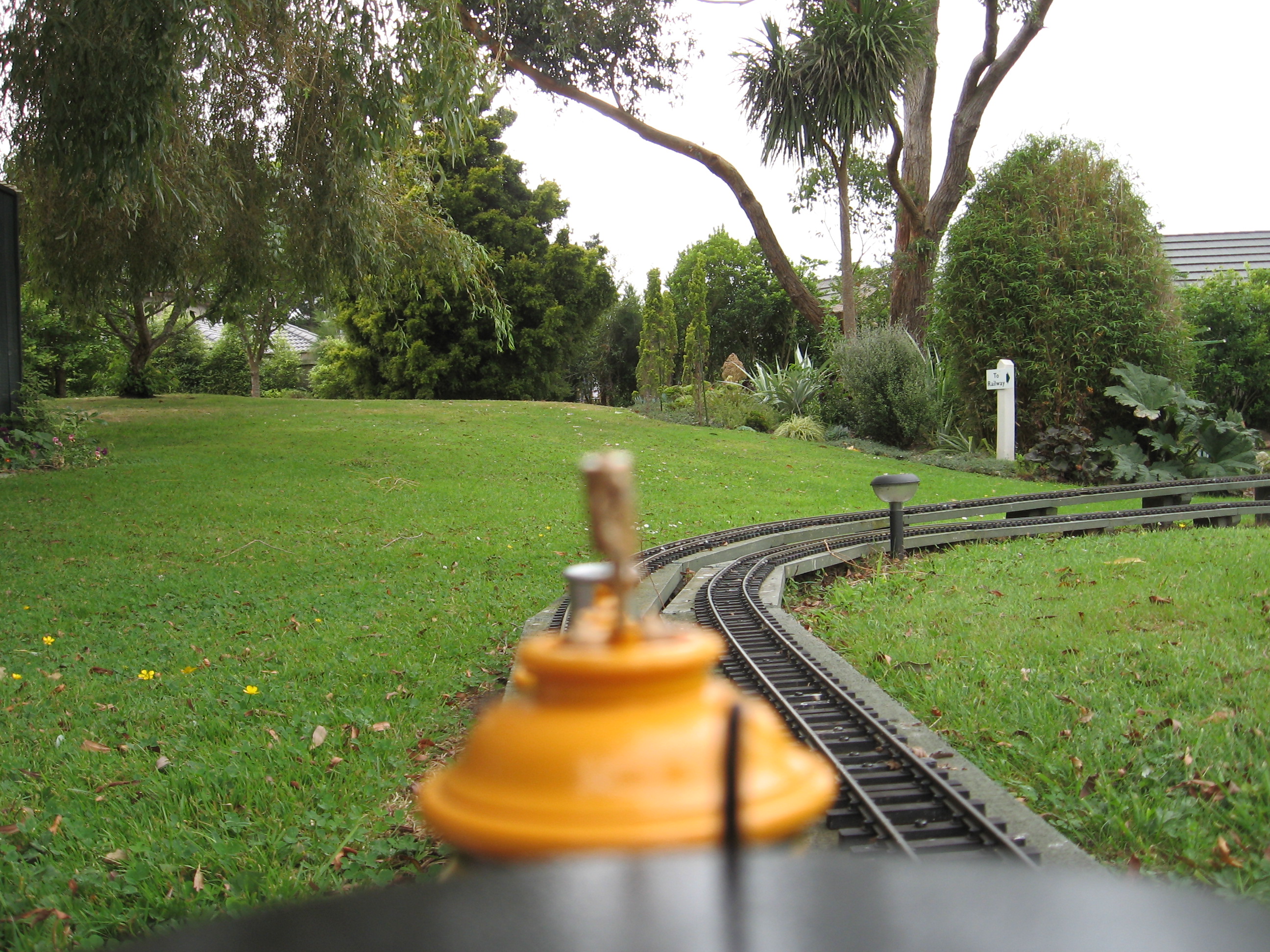
Garden railroading (commonly referred to as G scale railroads or Garden Scale
railroads)
is becoming increasingly popular because it combines the realism of
trains with a natural environment.

Some garden railroad layouts are complete with buildings, people and tiny
plants, whilst others have a track going through a full-size garden.

G scale garden railroad trains are larger than 0 scale (1:48) but smaller than
the trains that are large enough to ride on. G scale, is approximately 1:24
(varying from 1:19 to 1:32, actually). Most large-scale trains run on No 1 gauge
track (45mm between the rails). They are ideal for garden settings and because
they are large they are generally hard to derail. Some people also run O-scale
(1:48) Lionel trains outdoors.  

With a garden railroad being outdoors, you are dealing with real life. Trees are
growing living plants, mountains are made of dirt, rivers are made of water,
rocks are made of stone. And, they are exposed to the weather!

Careful planning is important to ensure that your garden railroad operates
efficiently and stands the test of time. When choosing a location for a garden
railroad - question whether or not it is secure. You don't want any harm to come
to your garden railroad or model trains.

Assuming you are happy with any security issues, then check to see how level
the proposed site is. Will you have to dig out parts of the garden to make it level
(or maybe bring in additional earth). Will you need to build retaining walls for
your garden railroad layout? Will the garden railroad fit in with an a existing
garden layout, or will the garden need to be redesigned to fit with the garden
railroad? Are there things in the way like fences, clotheslines, dog kennels,
buildings, paths, or swimming pools. What will need to be removed and what
can be worked around?
Garden Railroad Club News
Although we can't mention every model railroading club, we will from time
to time feature news and activities happening at various garden railroad
clubs from around the world. Here is some information about a couple of
clubs:

The Vancouver Island Garden Railroad Club (Canada) is a perfect example.
The garden railroad club was formed for like-minded people to share their
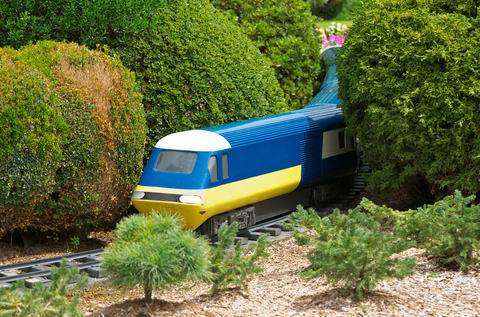
ideas and interest in garden railroading. These photos show a couple of
different garden railroads belonging to members.

Several other garden railroad photos can be seen at the Vancouver Island
Garden Railroad Club website.
'We don't stop playing because we grow old,
we grow old because we stop playing'
 
George Bernard Shaw
Creating a great model
railroad is both challenging
and fun …especially if you
have guidance from someone
who's been there.

Model Train Help is the perfect
resource for model railroading
enthusiasts who want
answers to everyday model
railroading questions -
including tips, clever ideas and
solutions to model railroading
problems.
Copyright © Robert Anderson and Market Leaders Ebooks. All Rights Reserved.
Hobby groups in the USA include:

Nevada:
Southern Nevada N-Trakers, Clark County, Nevada.

North Carolina:
Cape Fear Model Railroad Club Inc Wilmington, Carolina Coastal Railroaders New Bern, Carolina Model Railroaders Greensboro, Hinkle's Lionel Trains Lionel
collector and operator in the Charlotte, League Of Non Aligned Modelers Raleigh & Boone, Neuse River Valley Model Railroad Club Raleigh, North Raleigh
Model Railroad Club Raleigh, Piedmont and Western Model Railroad Club Valdese, Sipping and Switching Society of North Carolina Raleigh & Boone, Triad
Live Steamers 7.5" gauge Live Steam Club Farmington, Waynesborough Model Railroad Club Goldsboro, Wilson Area Railroad Modelers Inc. Wilson, NC.

Ohio:
Burning River 'N' Society Cleveland, C.A.N.S. (Columbus Area N Scalers) Columbus, Carillon Park Rail & Steam Society Dayton, Central Ohio Model Railroad
Club Columbus, Central Ohio N-Trak Columbus, Central Ohio S Gaugers Columbus, Cooke Road Train Crew Columbus, Crossroads Railroad Club Vandalia -
Ohio, Cuyahoga Valley S Gauge Association Cleveland, Cuyahoga Valley and West Shore Model Railroad Club Olmsted Falls, Greater Cincinnati Garden
Railway Society, The Hocking Valley Model Railroaders Lancaster, Janis Junction Model Railroad Club Columbus, Lake Shore Live Steamers Cleveland,
North Coast N-scalers, Pittsburgh & Ohio Northern Railroad Club Ada, The Sebring Model Railroad Club Sebring, Swanton area railroad and model club inc.
swanton, Travelin' Trainmen of North Central Ohio North Central Ohio, Tri-State NTRAK Cincinnati, Youngstown Model Railroad Club Youngstown, Ohio.

Oklahoma:
Central Oklahoma Model Railroad Club Oklahoma City, Claremore and Southern Railroad Club Claremore, Grenn Country Model Railroaders Green Country
Model Railroad Assoc - Oklahoma, Locomotive Operators of Central Oklahoma, North Central Oklahoma Rail Road Club Ponca City, Northeast Oklahoma N
Scale Tulsa, Oklahoma O Scalers Oklahoma City - Oklahoma, SouthWest Oklahoma Railroad Association Duncan, Southwestern Live Steamers.

Oregon:
Aloha and Western Oregon Lines HO Model Railroad Club Aloha, Columbia Gorge Model Railroad Club Portland, Corvallis Society of Model Engineers Adair
Village, Greater Portland LEGO Railroaders Portland, Over The Hill Live Steamers Chiloquin, Pacific Northwest Division of the Toy Train Operating Society
Seattle & Portland, Pacific Northwest Livesteamers Molalla, Rose City Garden Railway Society - Portland, South Coast Model Railroaders North Bend -
Oregon, Train Mountain Railroad Museum Chiloquin, OR.

Pennsylvania:
Track2, Allegheny Northern Railroad Club, The AMRS Hazleton, Capital PenNScalers Harrisburg, Carnegie Mellon Railroad Club Pittsburgh, Chelten Hills
Model Railroad Club Elkins Park, DARN NTRAK, East Penn Traction Club Philadelphia, GATSME Lines Fort Washington, Great All Saints Model Train Display
Pittsburgh, Keystone N Trak model railroad club Kulpsville, Keystone Model Railroad Historical Society Mechanicsburg, Keystone Chapter of European Trains
Enthusiasts Marietta, Lehigh Valley Large Scalers Lehigh Valley - Allentown, Lower Anthracite Model Railroad Club - Shamokin, McKeesport Model Railroad
Club, Nazareth Area Society of Model Engineers Stockertown, North Penn S Gaugers Lansdale, Penn State Model Railroad Club University Park, Reading
Society Of Model Engineers Reading, Southeastern Pennsylvania HO Modular Railroaders Willow Grove, St. Alban's Railroad Fellowship Newtown Square,
Strasburg Model Railroad Club Lancaster, Western Pennsylvania Railroad Society Hickory, Western Pennsylvania Model Railroad Museum Gibsonia,
Williamsport North Branch Railroad Historical Society Hughesville, Youngwood Historical & Railroad Museum Youngwood, Pennsylvania.

Rhode Island:
Providence Model Railroad Club Providence, Rhode Island Central Railroad Providence, RI Providence.

South Dakota:
James Valley Model RailRoad Association Aberdeen, South Dakota.

Tennessee:
Chattanooga Area Model RR Club Chattanooga, Mid-South Live Steamers Columbia - Tennessee, Nashville NTrak Nashville - Tennessee.

More groups listed on other pages.
Recommended
Model Railroad
Resources
Take all the guesswork
out of setting up the
perfect model railroad.
Easy to follow action
steps to quickly and
easily design, build,
maintain and repair a
model railroad you'll be
supremely proud of. All
explained step-by-step
at this excellent
model
railroad resources
website.
Model Railroad
Questions
Answered
Model Railroaders
(beginners and
experienced) were
asked to submit
questions they wanted
answered.

It was like opening the
floodgates!
The
questions came in thick
and fast, including a lot
of questions on Analog
verses DCC and
advanced electronics.

Clear concise answers
to all the questions are
laid out in the
Model
Train Help Ebook.
Sample  Of The
Model Railroad
Questions That
Get Answered
If I install a larger motor
in my locomotive will I
be able to pull more
cars?

What's wrong when a
part of the track will not
work? How do I go
about fixing it?
 

Should I replace my
horn-hook couplers with
knuckle couplers?  

What is rust-busting, a
talgo truck, "head-end"
traffic, a green wave
for freight trains?

What is meant by
"code", as in code 40
track? Is a locomotive
change-over the same
as shunting?

Which rails should I
use - brass, steel or
nickel-silver?  

How do I make plastic
buildings look real? Why
do some buildings look
translucent?

Should electric feed
wires be included every
couple of feet or should
I solder rail joiners?  

What is a bridge rectifier
and what does it do?

When I buy a track
switch, what is meant
by 'No. 4 turnout' or 'No.
8 turnout'?

Running techniques for
a locomotive on a
reversing loop. What
about stopping the loco
on the loop and
throwing the switch?

What is a decoder and
can I run an analog
locomotive on a DCC
system without a
decoder?

Can I just put a decoder
in my old analog
engines?  

Are 'O-gauge' and
'O-scale' the same
thing?  

Is there a right and
wrong way to cut track?

If I have limited space
what should I leave out
from my model railroad
layout?

What is a classification
yard and how does it
work? What are the yard
options for my model
railroad?

Should I have a
run-around track and
dedicated lead track?

What's a Capacitor
Discharge Unit and a
Solenoid Motor and
what do they do?

What's the difference
between DC and DCC?

What do I need to start
or convert my analog
model railroad layout to
a DCC system?

What's the difference
between service mode
and operations mode?

Can I control turnouts
with DCC?

What's a booster? Will
the ampere rating of a
booster and power
supply limit how many
locos I can run at the
same time?  

What causes a train to
short out on a turnout?

Clear concise answers
to these questions
along with hundreds of
other model railroading
tips and ideas are
included in the  
Model
Train Help Ebook.
Help For Model Railroad Enthusiasts
Model-Railroad-Resources.com